
.svg)
Singapore vs Switzerland vs UAE: Best Offshore Banking Jurisdiction in 2026
- CategoryBanking & FinTech
- DateMarch 16, 2026
- Share



For decades, offshore banking was largely associated with secrecy and tax minimization. That era has fundamentally changed. In 2026, the offshore banking landscape is defined by transparency, regulatory compliance, and institutional credibility.
High-net-worth individuals (HNWIs) are not simply searching for jurisdictions with low taxes or strict banking secrecy. Instead, they prioritize financial centers that combine political stability, strong regulation, sophisticated wealth management services, and global connectivity.
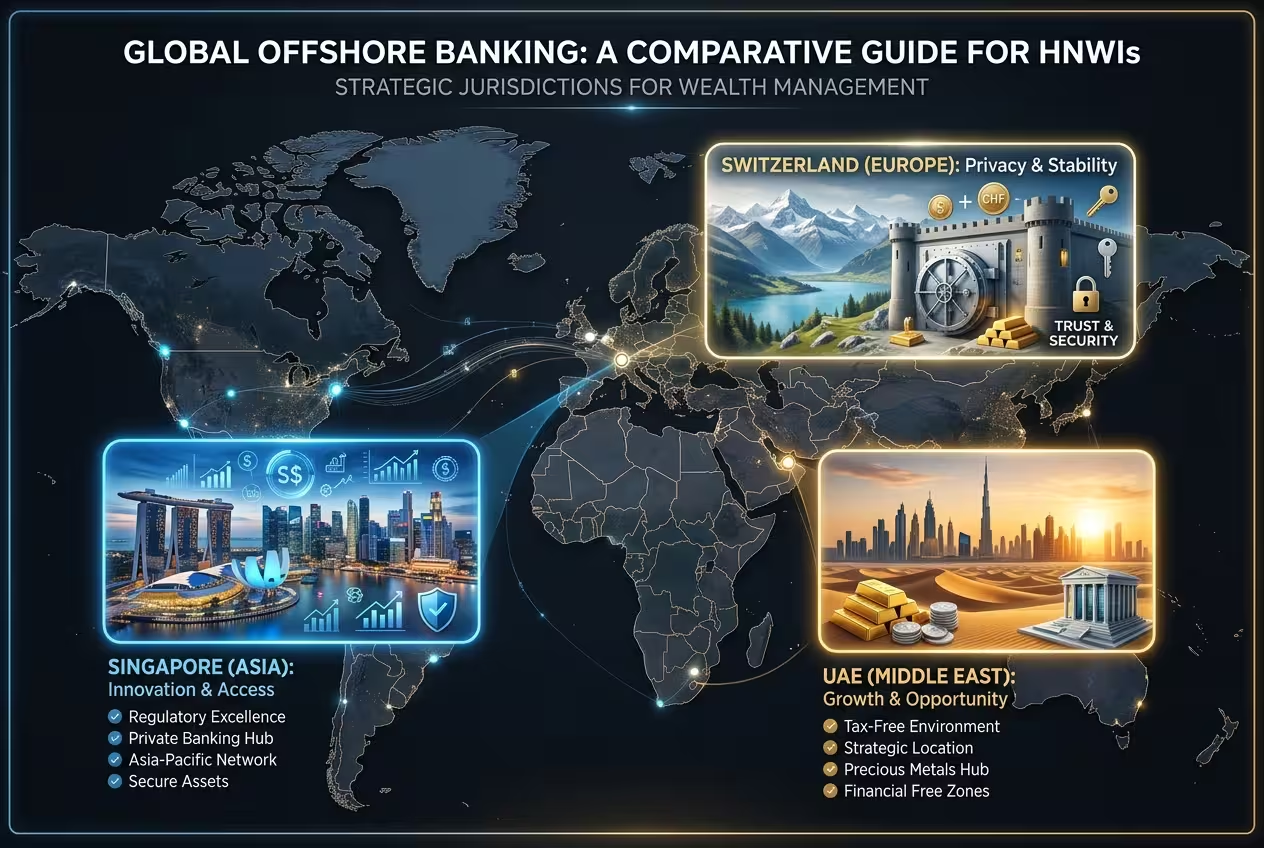
Three jurisdictions consistently dominate conversations among global investors and family offices: Singapore, Switzerland, and the United Arab Emirates. Each offers a unique value proposition depending on an individual’s financial structure, geographic exposure, and risk tolerance.
Understanding how these jurisdictions compare is essential for anyone designing an international wealth strategy.
Switzerland: The Legacy Global Wealth Hub
Switzerland remains the most historically recognized offshore banking center in the world. Its reputation for financial stability, confidentiality, and sophisticated private banking has been built over more than a century. Even after the global push for tax transparency weakened traditional banking secrecy, Swiss institutions have retained a powerful position in global wealth management.
Today, Switzerland’s primary strength lies in its institutional depth and wealth management expertise.
Swiss private banks have decades of experience managing complex international portfolios, family office structures, and cross-border investment strategies. The country’s regulatory environment is strict but predictable, which many wealthy individuals view as a sign of long-term stability.
Another advantage is Switzerland’s strong legal system and investor protections. Asset protection structures, trusts, and wealth planning vehicles are deeply integrated into the country’s financial ecosystem.
However, Switzerland is no longer the low-profile secrecy jurisdiction it once was. Compliance standards are extremely high, and banks often conduct extensive due diligence before accepting international clients.
For many high-net-worth individuals, this is not a drawback but a reassurance that assets are held within a highly credible financial system.
Singapore: Asia’s Wealth Management Powerhouse
Over the past two decades, Singapore has transformed itself into one of the most important global financial centers. The city-state has become particularly attractive for entrepreneurs, family offices, and investors with exposure to Asian markets. Singapore’s strength lies in its combination of efficient regulation, political stability, and forward-looking financial policies.
The country has aggressively developed its wealth management ecosystem, attracting major global private banks, asset managers, and investment firms. Family offices have expanded rapidly, supported by government initiatives designed to position Singapore as Asia’s leading wealth hub.
For high-net-worth individuals, Singapore offers several compelling advantages:
- strong banking regulation and transparency
- a stable and highly rated financial system
- proximity to fast-growing Asian economies
- world-class infrastructure and legal reliability
Another key advantage is Singapore’s reputation for operational efficiency. Opening accounts, managing structures, and coordinating financial services often happens faster and more seamlessly than in many older financial centers.
Because of these factors, Singapore is increasingly seen as the modern alternative to traditional European offshore hubs.
United Arab Emirates: The Fastest-Growing Wealth Magnet
The United Arab Emirates, particularly financial centers such as Dubai and Abu Dhabi, has emerged as one of the fastest-growing destinations for global wealth. In contrast to the legacy reputation of Switzerland and the institutional depth of Singapore, the UAE’s appeal is driven by economic dynamism and strategic positioning.
The country has invested heavily in building world-class financial infrastructure. International financial zones such as Dubai’s financial district offer regulatory frameworks modeled on global standards while maintaining strong business flexibility.
For high-net-worth individuals, the UAE offers several notable advantages:
- zero personal income tax
- strong economic growth and investment opportunities
- rapidly expanding private banking and wealth management services
- geographic positioning between Europe, Asia, and Africa
The UAE has also become a magnet for entrepreneurs and investors relocating from Europe, Russia, and parts of Asia. While its private banking ecosystem is younger than those in Switzerland or Singapore, major global banks have significantly expanded their regional operations in recent years.
This rapid growth is transforming the UAE into a serious competitor among global wealth hubs.
Compliance and Transparency in the Modern Offshore World
A key reality for offshore banking in 2026 is that full anonymity no longer exists. Global initiatives such as international financial transparency frameworks and automatic information exchange agreements mean that banks must comply with strict reporting requirements.
All major financial centers now operate within these frameworks, including Switzerland, Singapore, and the UAE.
As a result, the modern offshore strategy focuses less on secrecy and more on:
- asset diversification across jurisdictions
- regulatory stability
- access to sophisticated financial services
High-net-worth individuals increasingly prioritize banks that combine global compliance standards with strong wealth management expertise.
Wealth Management Quality: Where the Differences Matter
While all three jurisdictions offer high-quality financial services, their wealth management ecosystems differ in emphasis.
Switzerland excels in traditional private banking, portfolio management, and generational wealth planning. Its banks often specialize in conservative capital preservation strategies.
Singapore stands out in investment access and regional connectivity, particularly for individuals investing in Asia’s technology, venture capital, and emerging markets.
The UAE is strongest in entrepreneurial and business-driven wealth structures, often appealing to founders, investors, and international professionals relocating for lifestyle and tax reasons.
For many wealthy individuals, the choice depends less on which jurisdiction is “best” and more on which aligns with their broader global strategy.
The Rise of Multi-Jurisdiction Banking
Another major shift among high-net-worth individuals is the move toward multi-jurisdiction banking strategies. Rather than relying on a single financial center, many individuals maintain relationships with banks in multiple jurisdictions.
This approach offers several advantages:
- diversification of jurisdictional risk
- access to different investment ecosystems
- flexibility in global mobility and residency planning
For example, an entrepreneur might maintain wealth management accounts in Switzerland, investment exposure through Singapore, and operational banking in the UAE.
The goal is not complexity but resilience.
Choosing the Right Jurisdiction
Selecting an offshore banking jurisdiction in 2026 requires a holistic evaluation of several factors:
- political and economic stability
- regulatory credibility
- quality of private banking services
- proximity to investment opportunities
- compatibility with residency or relocation plans
For globally mobile individuals, banking decisions are increasingly integrated into broader strategies involving citizenship, corporate structures, and asset protection planning.
The Future of Global Wealth Hubs
The competition among financial centers is intensifying as countries recognize the economic value of attracting global capital. Switzerland continues to rely on its century-old reputation for stability and private banking excellence. Singapore is positioning itself as Asia’s premier wealth hub, while the UAE is rapidly evolving into a powerful magnet for entrepreneurs and investors.
For high-net-worth individuals, this competition creates opportunity. By carefully selecting the right jurisdictions and structuring financial relationships across multiple centers, they can build wealth strategies that combine stability, flexibility, and global reach.
In an increasingly uncertain world, where assets are held can be just as important as how they are invested.